 I think that, at some point, most people dream of writing the next Great American Novel. For most people, however, the dream does not last long, as it takes a lot of discipline, imagination, and skill to write effectively and correctly in a way that connects with readers. The good news is that you can improve your writing by following these easy steps. Not only will your technical skills improve, but your ideas and descriptions will improve as well, making your writing stand out among the rest, particularly if you are trying to get published.
Step 1: Avoid Spelling Errors!
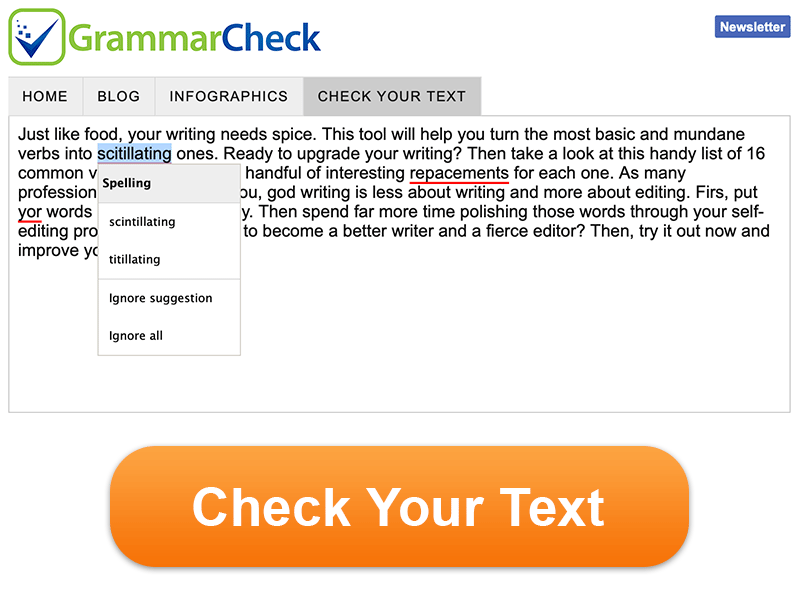
It may sound obvious, but you would be surprised by how many query letters or manuscripts are sent to agencies with basic spelling errors. No matter how good your ideas are or how great your story is, spelling errors will often keep your work in the slush pile (why is spelling important). Take your time and proofread your work before you send it off. Most word processing programs have a spell checker, but if yours does not, you might be interested in checking your spelling online here. Our homepage offers a free spell check so that you can send your work with greater confidence, knowing that you have taken steps to catch spelling errors.
Step 2: Avoid Grammar Errors
Our spell checker is able to catch misspelled words, but sometimes, if you aren't careful, you'll still miss grammatical errors during the same process. You don't have to know every single rule in the big book of English grammar, but you should be aware of at least the basics and make sure those basics are put to use before you send out or publish a text. Run-on sentences, misplaced sentence fragments, unnecessary switching between tenses, and changes in point of view without proper structure will lead to a confusing read. Brush up on your grammar knowledge so that you can avoid rejection based on something minor. Feel free to read our popular post on common grammar errors here to do this now, or bookmark it for later if you want to continue reading this post right now.
Step 3: Journal Your Thoughts
You don't need to take it to "Dear Diary" extremes, but by keeping a journal, you are giving yourself practice writing on a regular basis. It can simply be a record of your day, or it can be a place for ideas and feelings. When I was in college, a writing professor would have us find a poem and copy it into our journals each week. The idea was that by copying good work, we would recognize good work. When you recognize good work, you can begin to create your own good work. You can copy passages from good books you have read to get the process started, and before you know it, you're writing your own beautiful descriptions.
Step 4: Read
You can write all you want, but unless you take time to read, you will lose touch with topics and issues that are important and relevant right now. You have to read a lot to improve your writing. You will begin to notice the ways different descriptions work. You will recognize proper sentence structure, plot formation, and many of the nuances that skilled writers use to shape a story and draw you in. Reading stimulates the imagination and strengthens your own storytelling abilities. While not every person who reads a lot is inclined to be a writer, every good writer reads a lot. Whether it is the newspaper, a magazine, or a trashy romance novel, reading often will keep your brain in the best writing shape.
Step 5: Practice
Writing is definitely a skill you use or lose. When you don't practice writing, you can lose some of your ability to tie together ideas and thoughts. If you really want to improve your writing, you have to write often, even if it is simply copying a poem or a passage into your journal. You don't always have to come up with new ideas for a new story or book, as that is sometimes impossible, hence the term "writer's block." But you should definitely be practicing and honing your skills as much as possible so that they don't get rusty and you continue to improve.
Step 6: Get Plenty of Feedback and Know Your Audience
You may think you have the best story or the best idea. But when you tell somebody else about your idea, you may get a flat response. While not everybody has to like your ideas, it is important that there be some sort of appreciative audience for what you are writing. Get as much feedback as possible so that you know whether you are writing what people want to read. If you are writing a science fiction short story, be sure to ask people who know and appreciate science fiction what they think of your idea so you know whether you are on the right track. Knowing what your audience wants by getting plenty of feedback will help keep you from fading into oblivion.
Step 7: Accept Constructive Criticism Gracefully
This isn't always easy. Nobody likes criticism, but if it is genuinely designed to help improve your writing, then you should certainly consider whether there are valid points in it. This is particularly important if it is coming from an editor or an agent. They aren't trying to hurt your feelings, and remember that it is almost never personal. These people, however, know the business and know what they are talking about, so it is wise to at least consider their suggestions seriously. You can do what you wish with the advice, but when you can accept constructive criticism without getting defensive, you can get a lot further with your work. More information on how to get and respond to writing feedback is available here.
If you want to improve your writing, there are some simple steps you can take to make your work more readable and enjoyable. While not everybody will be able to deliver a great masterpiece of literature, you can certainly take some quick and easy steps to improve your writing and maybe even get your work noticed. Your writing will be taken far more seriously if you avoid spelling and grammar errors. Keeping a journal will help you keep your thoughts and ideas fresh and will also keep you writing on a regular basis. By reading often, you will begin to recognize the writing styles, patterns, and nuances that work well, and you will avoid common pitfalls of inexperienced writers. Finally, by knowing your audience and accepting criticism gracefully, you can truly begin to understand and master the art of writing, which makes your texts even more enjoyable for everyone you wish to reach. Happy writing!
3. Oxford Learner’s Dictionaries: A trusted dictionary resource and a useful place to check meanings, spelling, pronunciation, and example sentences.