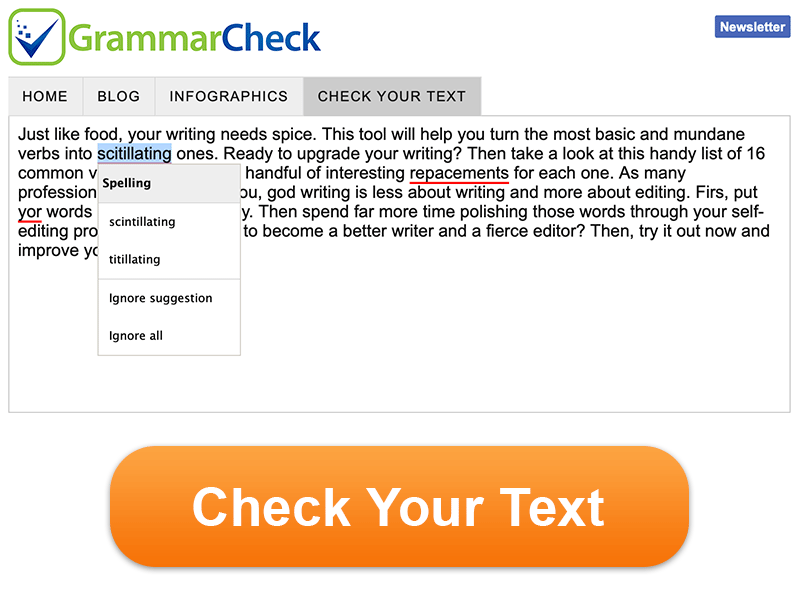
 In the world of modern SEO, so much time is spent keeping up with Google's newest algorithm updates, whether they are called Penguin, Panda, or something else named after a furry animal(!), that some of the other important aspects of gaining high rankings for valuable keywords are overlooked. One of these factors, highly worthy of further examination, is whether proper grammar has an effect on your rankings on Google. After all, with the majority of SEOs so immersed in the "rat race" of gaining an ever greater number of links, wouldn't it be great if you could gain an advantage by producing more grammatically correct content than your competitors? In the following few paragraphs, the answer to this important SEO question is revealed, along with a strategy for dealing effectively with its ramifications for content creation.
A Correlation Between Good Grammar and PageRank!
According to Google itself (Source), it seems that, at the very least, good grammar and spelling are related to PageRank. PageRank, updated every few months, is a link analysis algorithm named after one of Google's founders, Larry Page, which helps Google decide how much ranking "weight" is given to each individual page on the Web. Simply put, in general, the higher the PageRank of your main domain and individual pages, the greater your chance of securing high rankings for competitive niche keywords. Given that Google's own detailed analysis has found a correlation between correct grammar and spelling and PageRank ratings, it would seem fairly certain that you should make efforts to ensure your site's content possesses these qualities.
Google's Emphasis on User Experience = Correct Grammar Can Only Help!
In today's search engine "wars," in which Google competes with Yahoo, MSN, and other smaller search engines to capture as large a share of worldwide monthly searches as possible, Google fully understands that it needs to provide the best user experience possible in order to make people want to use it above all others. What's more, with Google's responsibility to shareholders largely dependent on the revenues generated by its AdWords platform, which depends on hundreds of millions of users using its search engine, Google is both fundamentally and financially 100% dedicated to creating a great user experience. Common sense dictates that the correct use of grammar, syntax, spelling, and punctuation is an important factor in making your visitors' time on your site enjoyable. Content riddled with grammatical errors will only deter visitors from returning to your site and make them stay for shorter periods when they do visit. Therefore, it could be argued that using correct grammar and spelling is essential to your long-term SEO success. It is already known that Google pays attention to the length of time spent on a site and, as of 2013 and beyond, is increasingly paying attention to social signals. To reduce bounce rates and increase the chances of your content being shared, thus sending positive social signals to Google, it is important not to let your overall content be undermined by bad spelling and poor grammar.
Good Grammar = Essential for Your Long-Term SEO Strategy!
While Matt Cutts, Google's leading spokesperson on all things related to SEO, has stated that correct spelling and grammar do not send "direct signals" to Google, he has also stated that there is undoubtedly a correlation. However, with Google's seemingly never-ending updates to its algorithm, that is not guaranteed to remain the case. In fact, as Google's technology and ability to "read" the actual content on a page improve, leading to a lessening in the absolute value of links alone, it is quite possible that correct spelling and grammar may eventually be factored in. The only way to prepare yourself fully for this type of possible algorithm update is to make sure that every piece of content you produce has excellent grammar and spelling. That is the best way to ensure that your content strategy is "evergreen," meaning that your levels of traffic will continue for many years to come.
The Most Valuable Sites Won't Link to Articles With Incorrect Grammar and Poor Spelling!
Ever since Google came on the scene, the most valuable commodity on the Web has been links. Purely and simply, links, their volume and quality, are still the main method of determining the value of any particular website and any particular page on the Internet. Despite the release of increasingly sophisticated algorithms, that looks highly likely to remain the case for a long time to come. So, you may ask, what do links have to do with using proper grammar and spelling? Well, the straightforward fact is that most of the leading websites on the Internet will not link to your articles, no matter how useful or informative the content itself is, if you do not use grammar in the way it is expected to be used. Given that these leading websites have the highest PageRank and will, therefore, pass on the greatest quantity of highly valuable "link juice" to your own pages, it is essential that your grammar, spelling, and overall command of English meet the standard they expect. For example, suppose you write a tremendous, thought-provoking article on your niche blog that attracts the attention of extremely influential websites such as "The Huffington Post" or "The Guardian." What if they were considering linking to your site, only to decide, due to poor grammar, spelling, and overall use of language, that they simply couldn't credibly recommend your site to their readers? Surely, that would be a huge letdown for your blog and would do a huge disservice to your brand. What's more, you would be missing out on valuable links that could, over time, skyrocket you up the rankings for your most prized keywords. That seems like a compelling case for spending the little extra time needed to ensure your grammar and spelling are up to scratch. What do you think?